 Dār as-Sayf wal-Qalam
Dār as-Sayf wal-Qalam
Dār as-Sayf wal-Qalam
The marches of Qurṭuba in the fourth century after the Hijra. Build a town, dig ore, strike dirhams, pay and feed an army, and hold the frontier against whoever comes for it.
Counters, not people. Every square is a company, a work gang or a building.
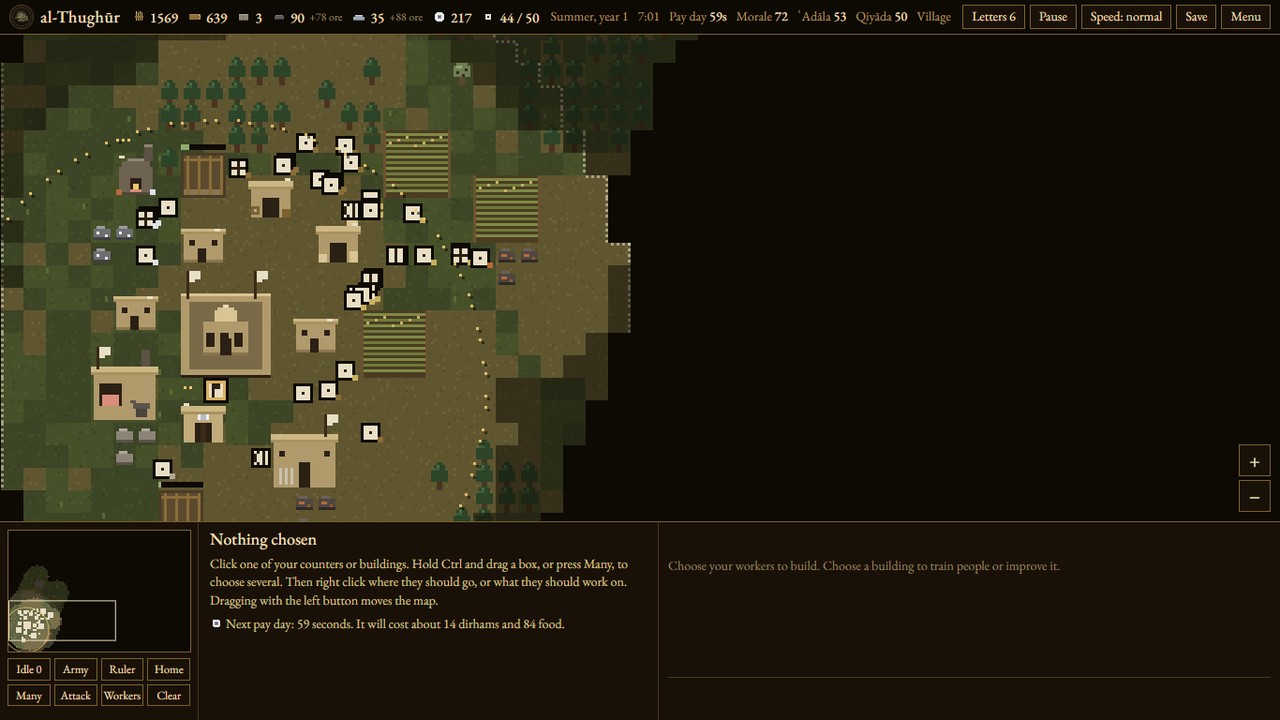
Houses for the people, fields and olive groves for the food, a furnace for the ore, a storehouse for what the carriers bring back. The land beyond your border stays dark until somebody walks it.
The long work of the Dār is As-Sayf wal-Qalam: Qurṭuba, a grand strategy of the Caliphate.
al-Thughūr was built beside it, small and finished, to put one of its rules on the table in a form you can play today: you are not given the battle. You are told about it, late, by a man who was there. The only place you watch a fight as it happens is where your own banner stands.
It is free, and runs in the browser.
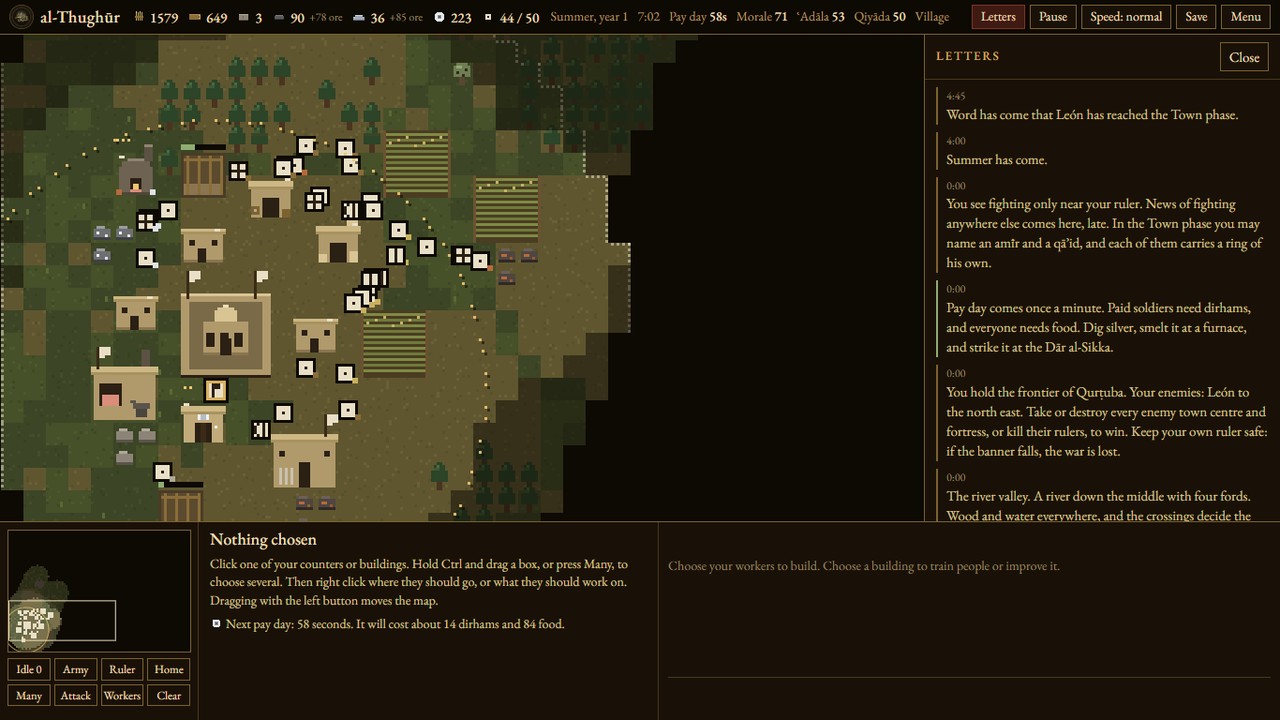
A fight far from your banner shows only a red mark on the map. What happened there reaches you as a letter, and the letter takes as long as the road takes. It is signed by the qāʾid if you have named one, otherwise by the watch, and it says which way the trouble lies from your own town. A report from far off gives rough numbers and says so.
Delayed news · Graded reports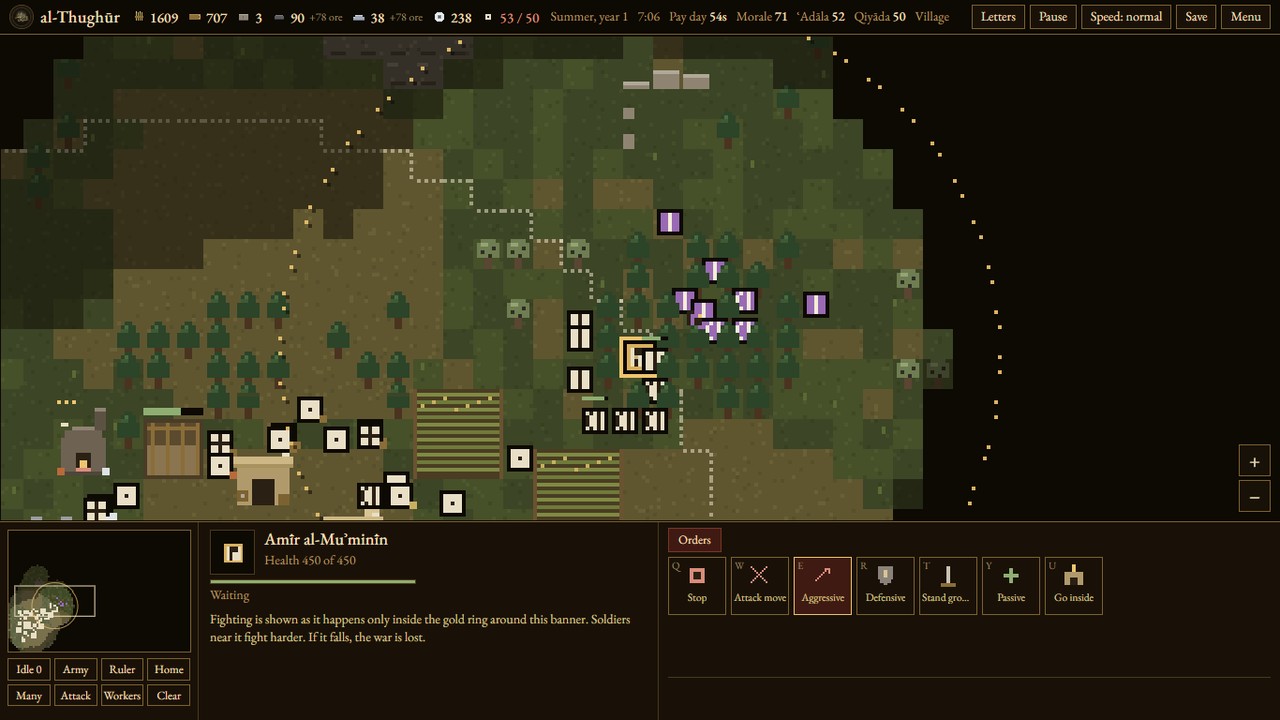
Inside the ring around your ruler, the war is shown as it happens: every blow, every man who falls, every counter that breaks. Name an amīr and a qāʾid and each carries a ring of his own, and a finished tower watches its own ground. Everywhere else you are back to letters.
The ruler's eye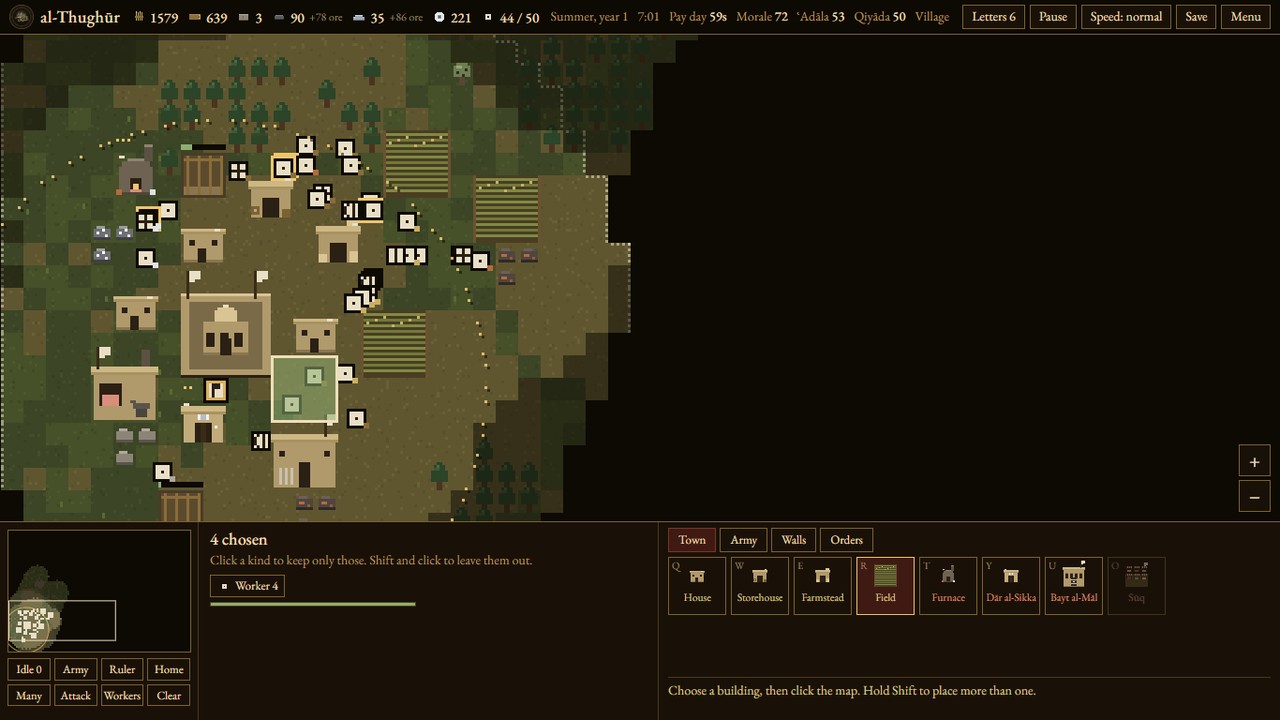
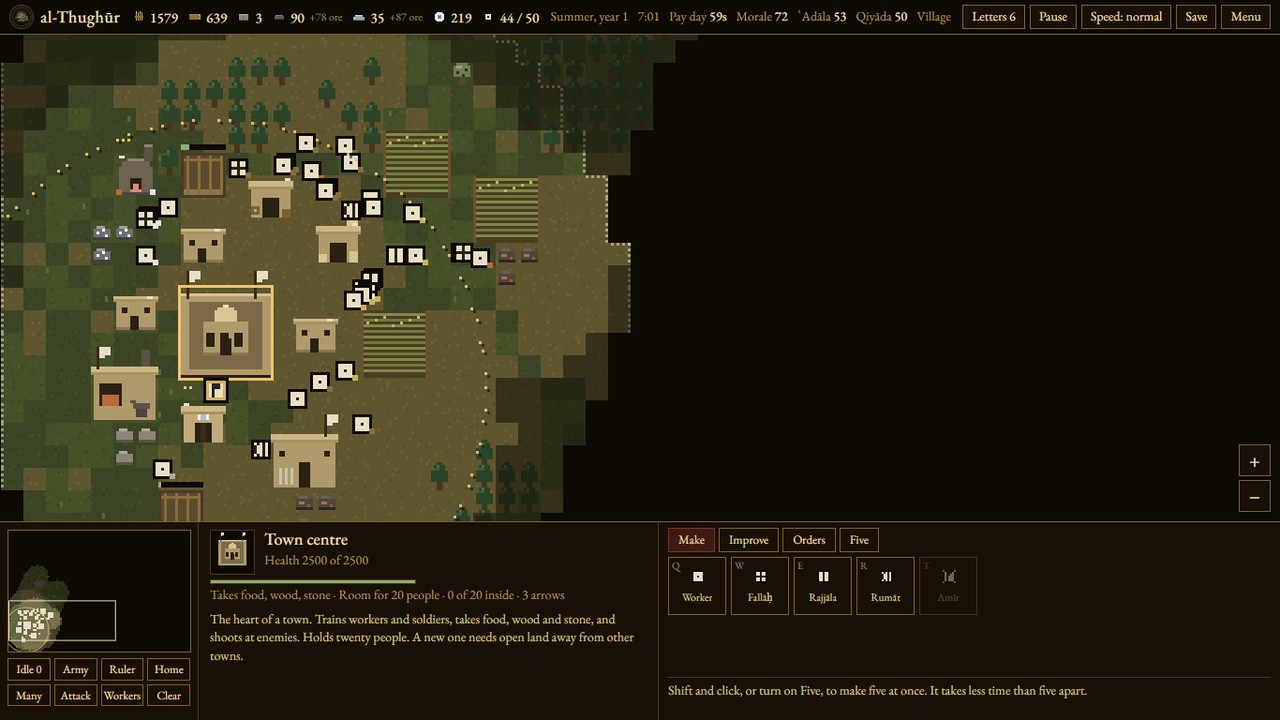
Small, but whole. A war runs about half an hour.
The river valley with its four fords, the dry plain where wood is scarce and ore is not, and the hill passes cut into quarters by rock. Nine places your town can stand: the four corners, the middle of each edge, or the middle of the map with the enemy all around you.
Silver comes out of the ground as ore. Workers inside a furnace smelt it, burning wood as they go. Workers inside the Dār al-Sikka strike it into dirhams. Pay day comes once a minute, and soldiers who are not paid grow bitter and walk off.
An amīr set over the place, a qāʾid over the column, a wazīr over the rolls. One man each, each with his own worth: a ring that stays open from inside a tower, late news pulled forward, a pay day that costs less. Lose one and you feel it.
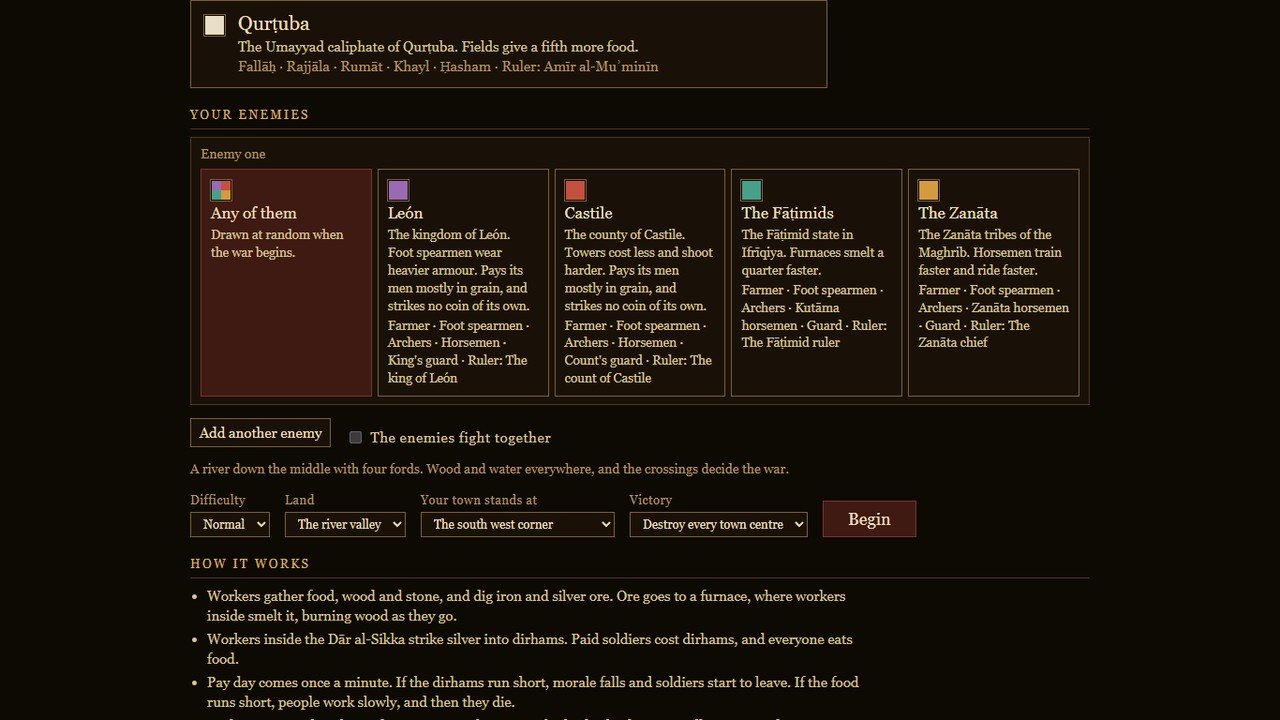
One, two or three enemies, drawn from León, Castile, the Fāṭimids and the Zanāta, allied against you or at each other's throats.
Nothing to install and nothing to sign. The war saves itself in your browser, so you can close it and come back to it.